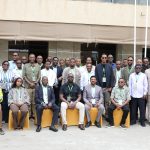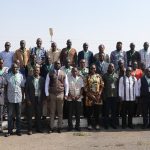


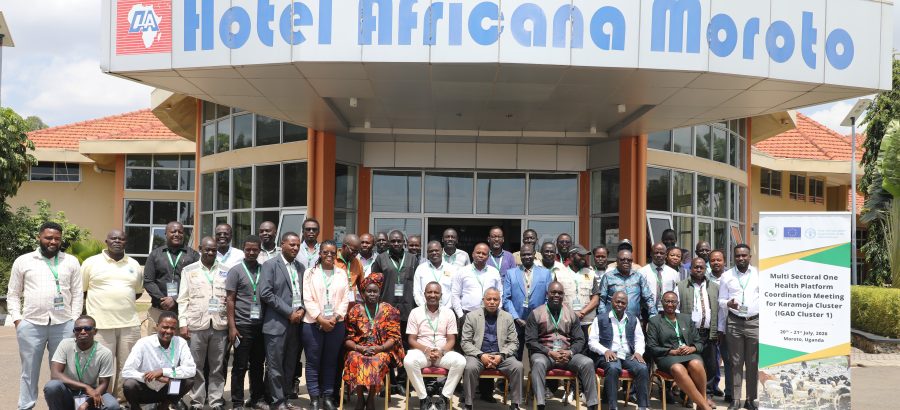
July 20-21, 2026 (MOROTO, Uganda) To bridge the gap between dialogue and regional action, the IGAD Centre for Pastoral Areas and Livestock Development (ICPALD) successfully convened the Multi-Sectoral One Health Coordination Forum for the IGAD Karamoja Cluster.
The two-day forum brought together key representatives from Ethiopia, Kenya, South Sudan, and Uganda, alongside regional organizations, technical experts, and development partners. The high-level gathering focused on a shared mission: strengthening cross-border collaboration to address transboundary health threats at the human–animal–environment interface.
Supported by the European Union (EU) through the Pastoralism and Livestock Adaptation to Climate Change in Eastern Africa (PLACE) Programme, the forum served as a critical platform to review regional progress, share best practices, and address existing implementation gaps. The final goal of the forum was the development of a joint 2026–2027 Action Plan to guide collaborative health interventions across the Karamoja Cluster.
Dr. Fred Menjo, representing Uganda’s Ministry of Agriculture, Animal Industry and Fisheries (MAAIF), officially opened the meeting. He urged Member States to institutionalize One Health frameworks at both national and sub-national levels to combat transboundary animal diseases and the growing impacts of climate change.
Speaking on behalf of ICPALD, Dr. Dominic Kathiya emphasized that the forum is central to the PLACE Programme’s objective of boosting resilience among pastoral communities through synchronized regional disease prevention and early warning systems.
A major takeaway from the forum was the call to expand the traditional boundaries of the One Health approach. Dr. Willington Bessong, speaking on behalf of the FAO Representative in Uganda, praised the collaboration between FAO, IGAD, the EU, and Member States. However, he urged leaders to look beyond zoonotic diseases and tackle emerging food safety hazards.
Dr. Bessong specifically highlighted the threat of aflatoxins and other mycotoxins contaminating crops and animal feeds. These contaminants directly impact livestock productivity, weaken animal immunity, and compromise human health as they move up the food chain. He called for urgent, coordinated action between veterinary, agricultural, and public health sectors to improve food safety surveillance.
The forum concluded with a unified commitment to building resilient health systems through:
- Harmonized surveillance and rapid cross-border information sharing.
- Synchronized disease control measures within the border zones.
- Stronger laboratory networks to improve early detection.
- Active community participation to drive public awareness and behavioral change.
By finalizing the 2026–2027 Joint Action Plan, the IGAD Karamoja Cluster Member States have laid down a clear, evidence-based roadmap to safeguard the health, livelihoods, and ecosystems of pastoral communities across the Horn of Africa.
###
Background
The One Health approach recognizes that the health of people, animals, plants and the environment is interconnected and requires coordinated, multisectoral action to effectively prevent, detect and respond to health threats. The Karamoja Cluster, spanning Ethiopia, Kenya, South Sudan and Uganda, is characterized by extensive cross-border pastoral mobility, shared ecosystems and livestock trade, which provide significant livelihood opportunities but also increase the risk of transboundary animal diseases, zoonotic diseases, antimicrobial resistance, food safety hazards and the impacts of climate change. Addressing these challenges requires strengthened collaboration among the human, animal, wildlife, plant and environmental health sectors, supported by harmonized policies, coordinated surveillance systems and effective cross-border information sharing.