

November 24-25, 2026 (MOGADISHU, Somalia) Somalia lawmakers and regional livestock experts have agreed on a coordinated roadmap to fast-track the signing and ratification of the IGAD Protocol on Transhumance, a major step toward protecting herders, boosting trade, and easing cross-border resource conflicts in the Horn of Africa.
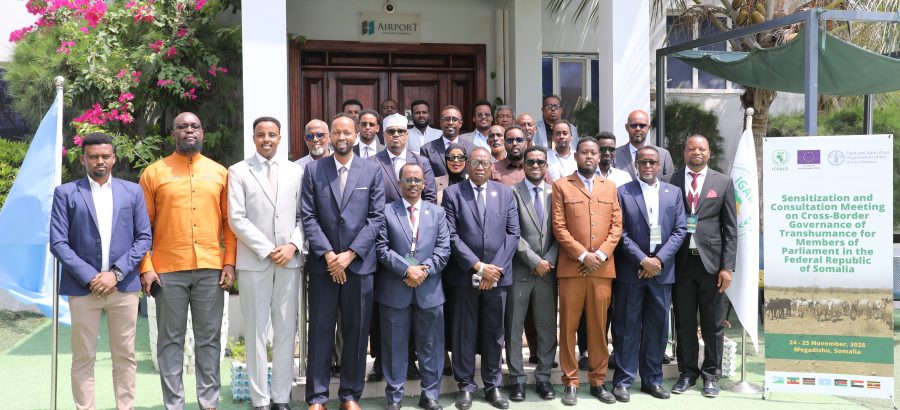
The milestone follows a two-day consultation and sensitization meeting held in Mogadishu on November 24–25, 2026. Convened by the IGAD Centre for Pastoral Areas and Livestock Development (ICPALD), the forum brought together Members of Parliament and government officials to examine how the regional agreement aligns with Somalia’s national laws and economic priorities.
A Lifeline for Herders and the Economy
Livestock is the backbone of Somalia’s economy, supported by the country’s vast coastline and busy export ports. Yet recurring droughts and climate variability often force pastoralists to cross borders in search of water and pasture—a journey that can spark local tensions or spread animal diseases if left unmanaged.
Speaking on behalf of IGAD Executive Secretary Dr. Workneh Gebeyehu, IGAD Head of Mission to Somalia Dr. Mohamud Abdi Ahmed highlighted how the Protocol directly addresses these challenges. “The Protocol will facilitate free, safe and orderly movement of herders and their livestock across the borders of neighbouring countries, so that they can reach water and pasture as an adaptation to climate variability,” he noted.
Dr. Dominic Kathiya, speaking on behalf of ICPALD Director Dr. Dereje Wakjira, emphasized that effective implementation goes far beyond grazing rights. He stated that “effective implementation of the Protocol can contribute significantly to peaceful coexistence, improved resource management, livestock production, disease control and enhanced regional livestock trade.”
Coordinating Across Borders
For Somalia’s veterinary and agricultural authorities, regional cooperation is essential to keeping herds healthy and export markets open. “The IGAD Protocol on Transhumance gives neighbouring countries a common basis for coordinating livestock movement, sharing animal health information, and working with border communities to manage access to pasture and water,” said Dr. Abdirahman Nur, Chief Veterinary Officer at the Ministry of Livestock, Forestry and Range.
During the sessions, participants reviewed the current state of pastoralism across the Horn of Africa alongside Somalia’s existing legal and policy frameworks. Lawmakers also walked through the exact constitutional and legislative steps required to formally adopt the Protocol.
Parliamentary Backing and Next Steps
Members of Parliament welcomed the dialogue, stressing the need to balance regional integration with national sovereignty and constitutional procedures.
“The IGAD Protocol on Transhumance deserves thorough discussion and careful consideration, taking into account Somalia’s national laws, priorities, and constitutional procedures,” said Hon. Mohamed Jama Mursal (Ghelle), Chair of the Foreign Affairs Committee. “We reaffirm the committee’s commitment to facilitating cooperation between Parliament, the Federal Government, and relevant regional institutions.”
By the close of the workshop, participants adopted a clear, inter-sectoral roadmap outlining specific timelines, action items, and institutional responsibilities to move the Protocol through the ratification process.
Regional Momentum
With this roadmap, Somalia moves closer to joining five neighboring IGAD member states that have already signed the Protocol:
- Republic of Sudan (June 8, 2022)
- South Sudan (June 17, 2022)
- Djibouti (November 30, 2022)
- Ethiopia (November 30, 2022)
- Kenya (June 6, 2024)
The Mogadishu policy dialogue was funded by the European Union under PLACE Project.
###