

May 18-19, 2026 (ADDIS ABABA, Ethiopia) ICPALD participated in GHACOF73 which was organized by the IGAD Climate Prediction and Applications Centre (ICPAC), in collaboration with partners. The forum focused on the June to September (JJAS) 2026 season.
The session was held within the framework of IGAD’s Regional Strategy for Mainstreaming Climate Services in Key Socio-Economic Sectors for Sustainable Development with the theme “Advancing Climate Services for Resilient Communities and Sustainable Development in the Greater Horn of Africa”.
H.E. Mohamed Abdi Ware, IGAD Deputy Executive Secretary, on behalf of the Executive Secretary, opened the 73rd Greater Horn of Africa Climate Outlook Forum in Addis Ababa. In attendance were Member States, climate scientists, researchers, users from key socio-economic sectors, governmental and non-governmental organizations, development partners, decision-makers, media and civil society stakeholders.
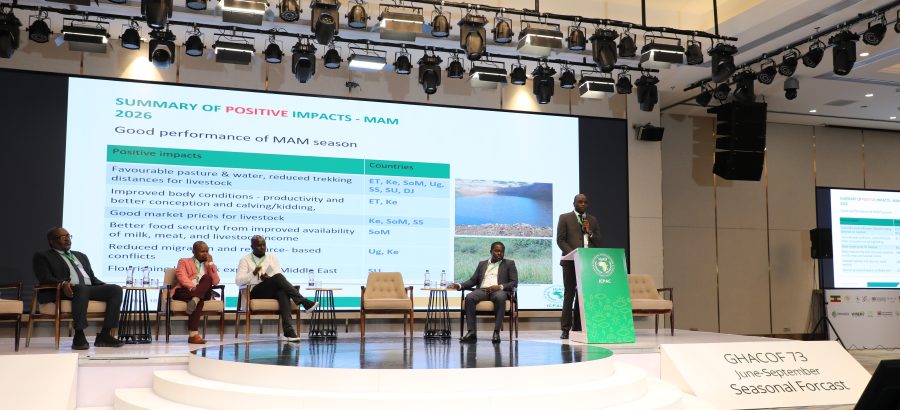
As part of taking stock of GHACOF72 findings, ICPALD’s Head of Dryland Development Unit, Dr. Guyo Roba, took delegates through the MAM seasonal analysis highlighting the:
- Positive and negative climate impact on the #livestock sector
- Implementation & impact of climate services & advisories, particularly the recently carried out synchronized animal vaccination along the Kenya-Namanga and Ethiopia-Kenya borders
Co-production cafés with key sectors (agriculture, water, energy, health, livestock, media and disaster risk management) were held on 18th May during which these sectors developed the June to September (JJAS) 2026 seasonal outlook anticipatory actions, supporting preparedness and informed decision making across the region.
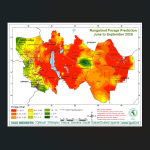
The livestock sector café co-planned the JJAS 2026 seasonal advisories and thereafter engaged participants at the walk-about session of the meeting. Some aspects considered in developing the JJAS livestock sector mitigating actions included the risk of drought, heat stress, disease and conflict which affect pasture availability, feed access and animal body conditions.
A coordinated response mechanism ensures access to available resources is timely to minimize the impact of seasonal climate changes, as opposed to different actors operating independently. This calls for collaboration to effectively execute both anticipatory actions and climate shock response.
ICPALD’s participation was funded by International Development Research Centre (IDRC) /Foreign Commonwealth & Development Office (FCDO) under the Strengthening Pastoral Livelihoods in the African Greater Horn through Effective Anticipatory Action (PASSAGE) project.
###
Additional Resources: