


A Makerere University needs assessment of 106 frontline personnel across the PASSAGE project landscape, supported by IDRC-Canada and led by IGAD
By Anthony Egeru & Gordon Yofesi Mwesigwa – Department of Environmental Management, Makerere University
Four in five frontline organisations across the Greater Horn of Africa’s pastoral landscapes say they already receive climate-related early warning information. By most measures of reach, that should be good news. But a new Makerere University needs assessment, conducted under the IDRC-Canada-funded, IGAD-led PASSAGE project, reveals a more uncomfortable truth sitting just beneath that statistic: getting information to people is not the same as getting them to trust it, receive it often enough, or believe it actually protects them. Of the 106 frontline personnel surveyed across Karamoja, Turkana and Marsabit, Borana, South Sudan’s Equatorial States and Mandera, a majority describe an early warning system that reaches them, technically, but still falls short of what a warning system is supposed to do.
Reach without regularity
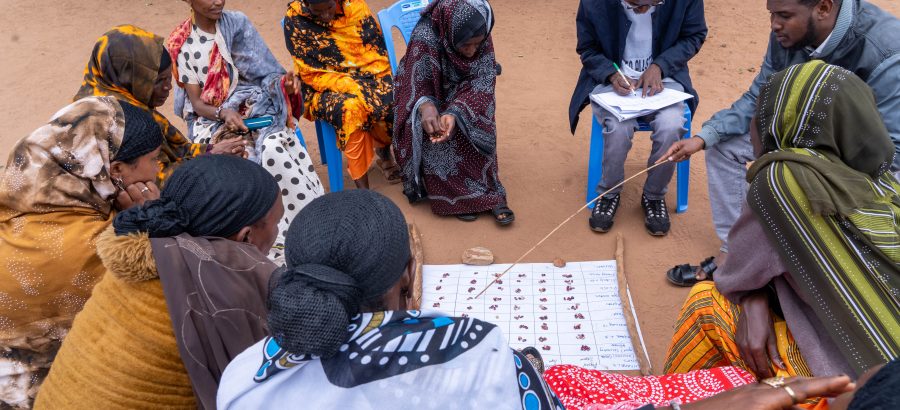
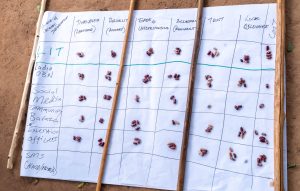
Eighty-three of 106 respondents (78.3%) confirmed their organisation receives climate-related or early warning information. The channels carrying it are a genuine mix of old and new: community radio (76 mentions) and traditional knowledge (70) lead the list, ahead of local meetings (65), social media (60), word of mouth (43), television (40) and SMS alerts (24). That spread matters — it suggests no single channel dominates the landscape, and that any future early warning strategy will need to work through several of these simultaneously rather than betting on one.
The trouble starts with frequency. Asked how often their community receives climate-related updates, 52.8% of respondents said “rarely,” and a further 22.6% said only monthly. Just 11.3% receive weekly updates, and a mere 2.8% receive them daily — for hazards like flash floods or disease outbreaks that can turn from warning to emergency within days, a system built on rare or monthly updates is structurally too slow.
A system rated “adequate, but only just”
When asked directly to rate the effectiveness of current early warning systems, respondents split almost evenly into three camps: 30.2% called them ineffective or very ineffective, 30.2% were neutral, and 34% called them effective or very effective. No clear majority emerges in any direction — a system that works well enough for a third of the landscape, and not at all for another third.
Reliability tells a similar story. Only 15.1% of respondents said the information they receive is mostly or always reliable; 61.3% said it is only “sometimes reliable,” and 23.6% called it rarely or never reliable. Pressed on whether early warning systems adequately address the risks their community actually faces, the largest group — 65.1% — chose the survey’s most qualified option: “somewhat, but improvements are needed.” Only a quarter said the systems address most risks outright, and 8.5% said they fail to address key risks at all. Taken together, these numbers describe neither a broken system nor a working one, but something in between: present, partially functional, and clearly unfinished.
Why elders still outrank institutions
Perhaps the survey’s most striking finding is about trust rather than infrastructure. Asked who their community trusts most for accurate climate-related information, the largest single group of respondents — 40 of 106, or 37.7% — named elders or traditional knowledge holders, ahead of NGOs and community-based organisations (18.9%), government agencies (17%), media (16%) and local leaders (9.4%) combined. In a landscape where formal early warning infrastructure — radio networks, SMS alerts, government meteorological bulletins — has been built up over years, it is still older, informal, community-rooted authority that pastoral communities lean on most when the information matters. That is not necessarily a failure of the formal system; it may simply reflect where trust has historically been earned. But it is a design fact which any future early warning strategy has to reckon with: bypass elders and traditional knowledge structures, and a system risks being technically present but socially irrelevant.
Notably, despite this uneven trust and reliability, most communities do act. Nearly 68% of respondents said their community has acted on early warning information in the past, with a further 18.9% saying “maybe.” That is an encouraging sign for anticipatory action’s core premise — people are willing to move on a warning, even one they only sometimes trust — provided the information reaches them at all.
What communities actually want
Respondents were clear about which types of information matter most: drought warnings (90.6% of respondents), rainfall forecasts (88.7%) and livestock disease alerts (86.8%) were named far more often than general extreme-weather warnings (48.1%), a direct echo of the hazard data gathered elsewhere in the same survey, where drought and livestock disease dominate.
They were equally clear about what’s holding the system back. The top-cited barriers were limited access to communication channels (71.7% of respondents), poor infrastructure such as missing electricity or network coverage (64.2%), late delivery of information (59.4%), limited technical knowledge to interpret what they receive (58.5%), and a lack of feedback mechanisms to question or clarify information (49.1%). Gender disparities in access and language barriers were also flagged by roughly a third of respondents each — a reminder that “reach” is not evenly distributed even within a single community.
Asked what would improve things, respondents converged on a consistent set of fixes: greater use of local languages (75.5%), more training so people can understand and act on warnings (75.5%), community-based information hubs (72.6%), more frequent updates (71.7%), and — tellingly — more community involvement in designing the systems in the first place (71.7%). When asked how they would prefer to receive future risk narratives, community meetings and workshops were the clear top choice (39.6%), ahead of radio (20.8%) and SMS alerts (20.8%) — a preference for face-to-face, trusted settings over one-way broadcast technology.
The takeaway for PASSAGE’s next phase
The picture that emerges is not one of absent infrastructure but of a system still calibrating itself to the people it serves. Sixty-two percent of respondents have already been trained in using early warning information, evidence that capacity-building is underway rather than starting cold. What remains is narrower but harder: making information arrive faster, in local languages, through channels — especially community meetings and trusted local voices — that communities already believe, rather than assuming that more technology alone will close the gap between a warning issued and a warning acted on in time.